

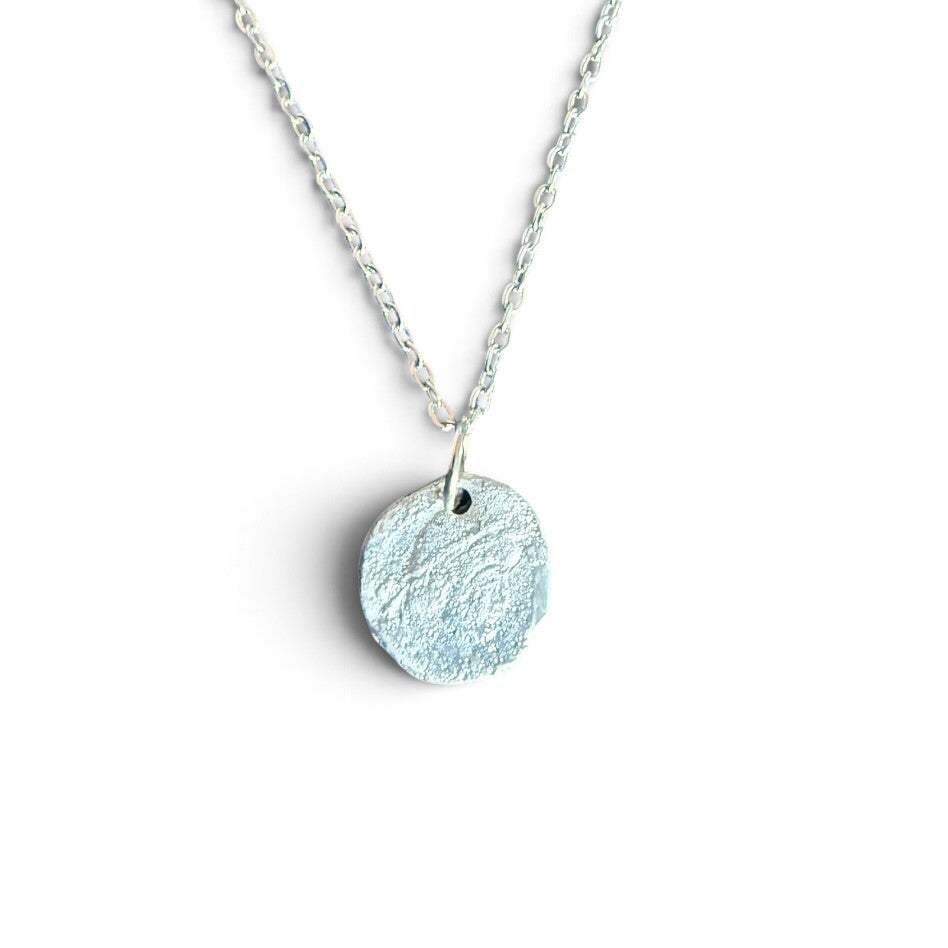
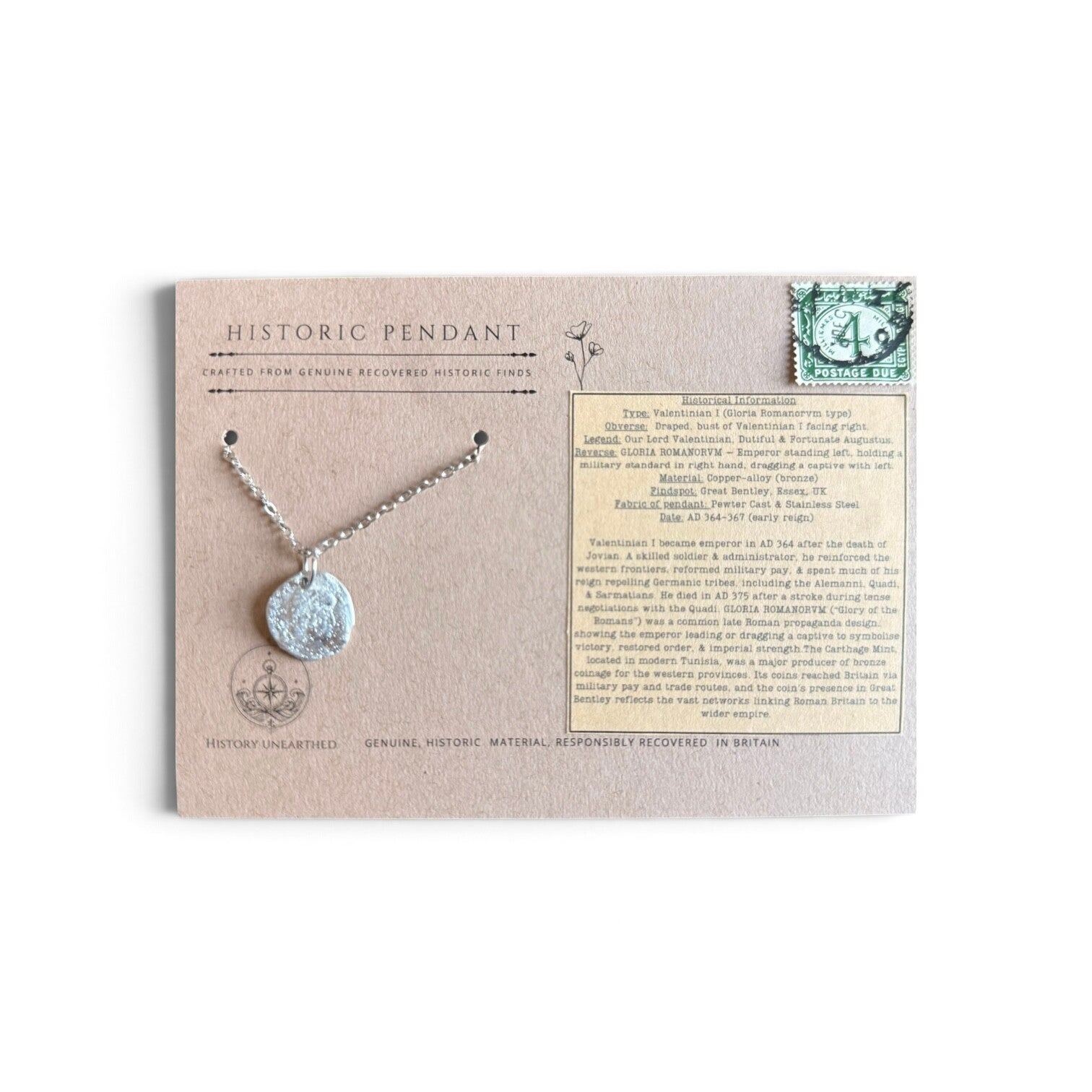
Pewter Sand Cast of Metal Detected Roman Coin
Historical Information
Type: Valentinian I (Gloria Romanorvm type)
Obverse Draped, bust of Valentinian I facing right
Legend: Our Lord Valentinian, Dutiful & Portunate Augustus
Reverse: GLORIA ROMANORVM - Emperor standing left, holding a military standard in right hand, dragging a captive with left
Material: Pewter SandCast of Copper-alloy (bronze) coin
Rindspot: Great Bentley, Bssex, UK
Fabric of pendant: Pewter Cast & Stainless Steel
Date: AD 364-367 (early reign)
Valentinian I became emperor in AD 364 after the death of Jovian. A skilled soldier & administrator, he reinforced the western frontiers, reformed military pay. & spent much of his reign repelling Germanic tribes, including the Alemanni. Quads & Sarmatians. He died in AD 375 after a stroke during tense negotiations with the Quadi. GLORIA ROMANORM ("Glory of the Romans" was a common late Roman propaganda design, showing the emperor leading or dragging a captive to symbolise victory, restored order & imperial strength The Carthage Mint located in modern Tunisia, was a major producer of bronze coinage for the western provinces. Its coins reached Britain via military pay and trade routes and the coin's presence in Great Bentley refiects the vast networks linking Roman Britain to the wider empire.